Is Chipotle Healthy
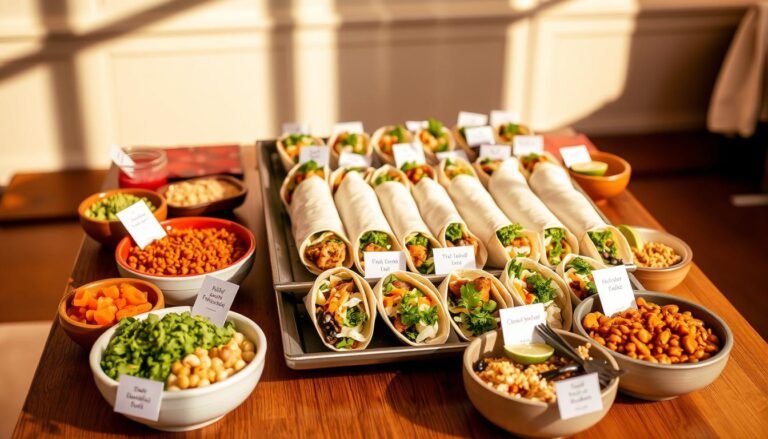
We often get asked whether a build-your-own meal at this popular Mexican grill fits sensible nutrition goals. The answer depends on each ingredient you pick and the portions you accept.
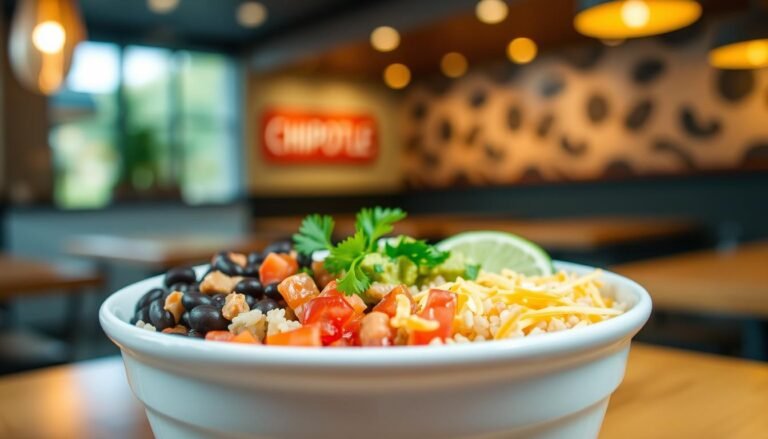
In this guide, we walk through calories, protein, sodium, and fiber so you can build a balanced bowl or salad. We compare rice choices, beans, fajita veggies, and the impact of toppings like cheese, sour cream, and guacamole.
We will show swaps that cut calories and sodium, such as skipping a flour tortilla or choosing brown rice over white rice. You can learn how steak or chicken and black pinto beans affect grams of protein and overall fat per serving.
By using the chain’s nutrition tools and simple portion rules, we help you make meal choices that match your daily needs without losing flavor or variety.
Understanding the Nutritional Reality of Chipotle
Picking components at the counter can make a light lunch or a calorie-dense feast depending on your choices. We want to show how portions, bases, and add-ons shape the final nutrition content of a bowl or salad.
The Build-Your-Own Format
The build-your-own format gives control but also risk. A typical meal can top 1,000 calories, which is over half of a 2,000-calorie day.
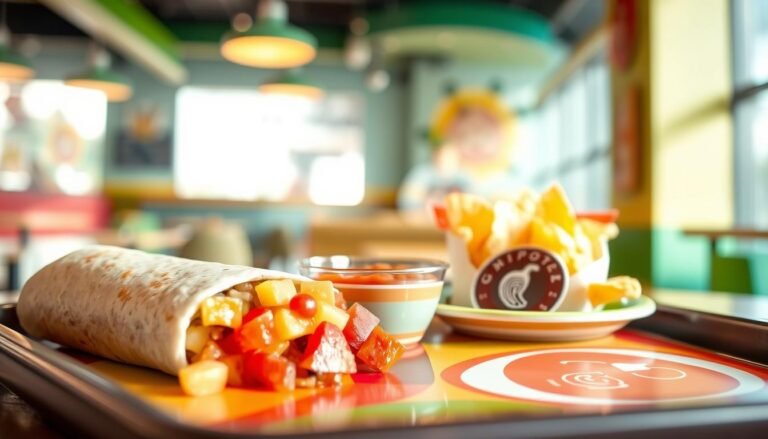
Adding a flour tortilla alone adds 320 calories and about 600 milligrams of sodium. Choosing a burrito instead of a bowl often raises refined carb and sodium totals.
Why Fresh Does Not Always Mean Nutritious
Fresh ingredients can still yield a high-fat, high-calorie plate when we add sour cream, cheese, queso, and guacamole. Even chicken or steak with beans may add grams of fat and sodium that matter for daily totals.
- Pick brown rice over white rice to boost fiber and steady energy.
- Choose a bowl or salad to cut refined carbs from a flour tortilla.
- Use salsa and lettuce as flavorful, low-calorie toppings instead of creamier options.
Is Chipotle Healthy When You Customize Your Order
Customization at the counter gives you real control over calories and nutrients in a single meal.
We can tailor a burrito bowl or salad to fit gluten-free, vegetarian, or vegan needs. Registered dietitian Roxana Ehsani highlights that picking peppers, onions, and fresh salsa boosts vitamins and fiber without adding many calories.
High-fat toppings like sour cream, cheese, and guacamole add flavor but can push grams of fat and total calories quickly. Saying no to extra scoops or choosing smaller servings keeps the nutrition content sensible.
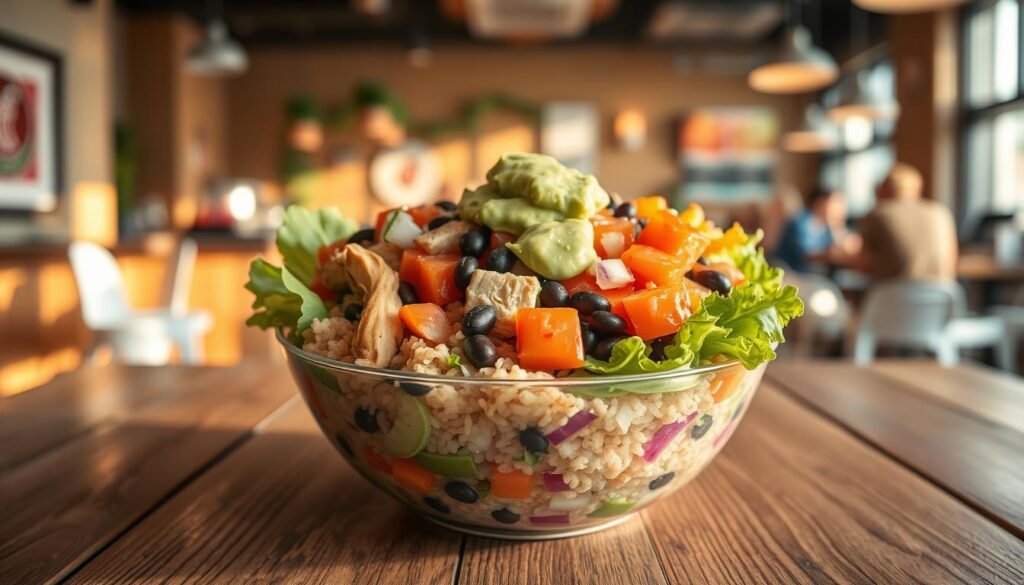
- Customization is the main reason many view this food as a healthy option; it lets us choose rice, beans, and protein to match goals.
- Choose a bowl or salad instead of a tortilla to cut carbohydrates and sodium in one move.
- Focus on beans and salsa to get fiber and flavor while keeping fat and sodium lower.
Comparing Protein Options for Your Bowl
Choosing the right protein shapes how many calories and grams of protein appear in a bowl. We compare popular picks so you can match portions to your goals.
Animal Protein Choices
Chicken is a lean, high-protein choice with about 180 calories, 32 grams of protein, and 310 mg of sodium per serving. It fits well when we want satiety with moderate calories.
Steak provides roughly 150 calories, 21 grams of protein, and 330 mg of sodium per serving. Barbacoa and carnitas add more sodium; barbacoa has 170 calories and 530 mg sodium, while carnitas brings 210 calories and 450 mg sodium.
Plant-Based Alternatives
Sofritas offers a tofu-based option with about 150 calories, 8 grams of protein, and higher sodium near 560 mg.
Adding black beans or pinto beans boosts fiber and protein; a scoop adds roughly 8 grams of protein and steadying fiber to the bowl. Pairing beans with brown rice and veggies balances macronutrients and keeps calories in check.
| Protein | Calories | Sodium (mg) | Protein (g) |
|---|---|---|---|
| Chicken | 180 | 310 | 32 |
| Steak | 150 | 330 | 21 |
| Barbacoa | 170 | 530 | 24 |
| Carnitas | 210 | 450 | 23 |
| Sofritas | 150 | 560 | 8 |
The Impact of Bases and Toppings on Your Health
Small choices at the line often create large differences in calories and sodium totals.
The Hidden Cost of High-Calorie Add-ons
Sour cream adds about 110 calories and 7 grams of saturated fat per two-ounce serving. That single scoop can raise the energy density of a bowl or burrito fast.
Guacamole gives heart-healthy unsaturated fats but packs roughly 230 calories and 370 mg of sodium per scoop. Fresh tomato salsa is low in calories but can still contain up to 550 mg sodium in a four-ounce serving.
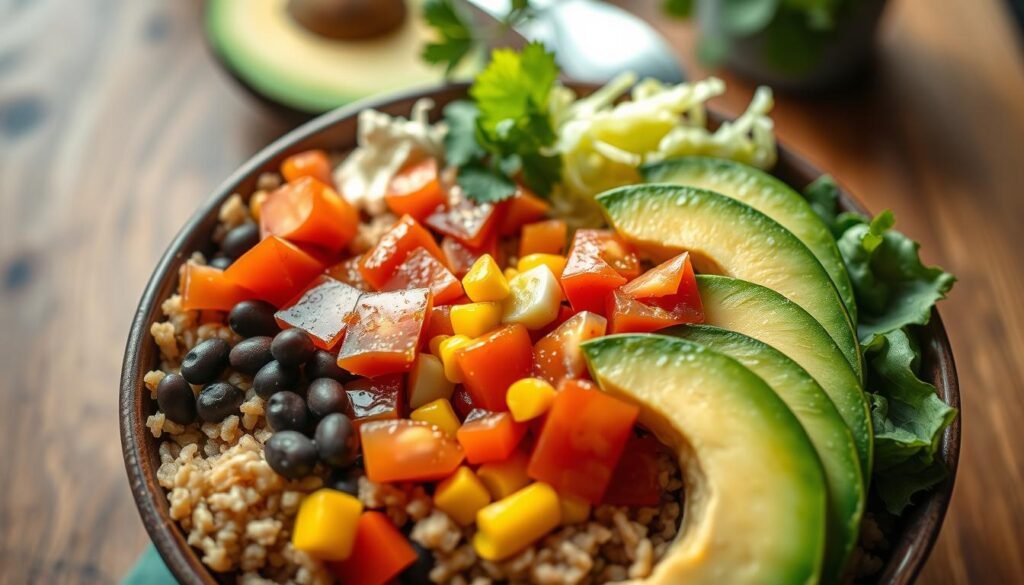
- Bases: salad greens are the lowest-calorie choice; brown rice adds fiber and longer-lasting energy compared to white rice.
- Toppings: cheese and queso add saturated fat and calories, so ask for light portions when possible.
- Veggies: fajita veggies and lettuce bulk up a meal with vitamins, fiber, and minimal calories.
- Swap tips: choose salsa over creamier sauces and skip the flour tortilla to cut refined carbs and sodium.
| Ingredient | Example per serving | Nutrition impact |
|---|---|---|
| Sour cream | 2 oz | 110 calories, 7 g sat fat |
| Guacamole | 1 scoop | 230 calories, 370 mg sodium |
| Fresh tomato salsa | 4 oz | low calories, up to 550 mg sodium |
We prioritize veggies and lean protein to keep meals balanced. Always consider how small toppings add up across a serving to avoid surprise calories and sodium.
Strategies for Managing Calories and Sodium
We can lower calories and sodium by planning our order before we reach the counter. The online nutrition calculator lets us build a bowl or burrito virtually and shows exact calories, fat, and sodium for each serving.
Ask for light or half portions of rice and beans to cut both calories and sodium without losing balance. Choosing brown rice adds fiber and steady energy, but portion size still matters.
Swap red chili salsa for green chili salsa to reduce sodium while keeping bold flavor. Add fajita veggies to boost volume; they fill the bowl with minimal calories and add vitamins.
- Use the nutrition calculator to see totals before ordering.
- Box half the meal to control portions and avoid excess calories later.
- Limit toppings like sour cream, cheese, and queso to lower saturated fat and calories.
| Strategy | Impact | Practical Tip |
|---|---|---|
| Half portions of rice & beans | Reduces calories and sodium substantially | Ask staff for “light” servings |
| Choose brown rice | Higher fiber, steadier energy | Pair with black beans for extra protein and fiber |
| Swap red salsa for green | Lower sodium with similar flavor | Try green chili salsa instead of spicier red |
Navigating Dietary Preferences and Restrictions
Our menu’s flexibility makes it simple to match meals to food preferences and medical needs.
For a gluten-free meal, skip the flour tortilla and choose a bowl or salad. This avoids wheat and eases cross-contact risks.
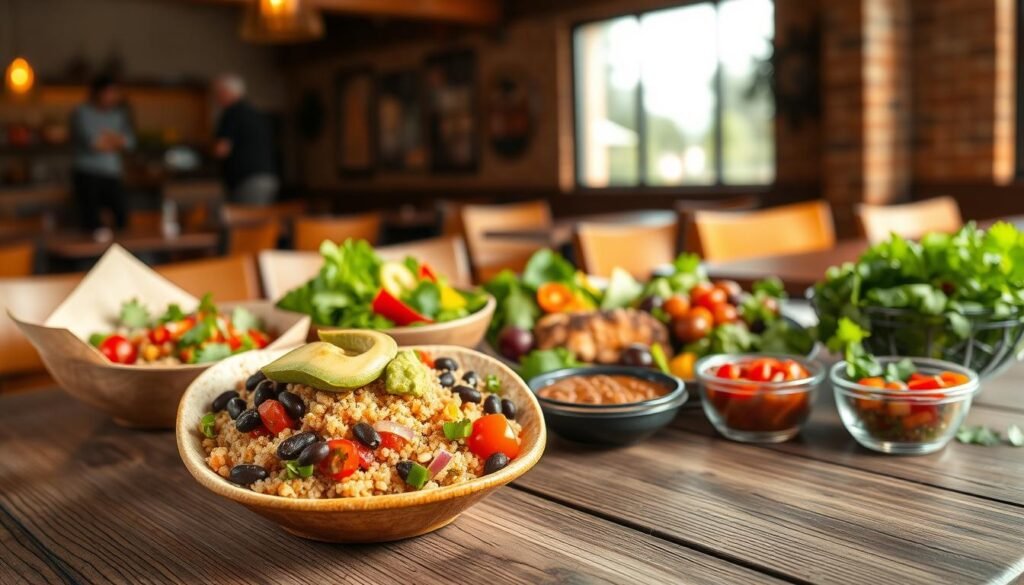
Vegetarians can rely on sofritas or a double scoop of beans to get enough protein and fiber. Vegans should omit cheese, sour cream, and queso, and load up on rice, beans, fajita veggies, and salsa.
- Staff are trained to handle custom requests, so tell them about allergies or strict preferences.
- Pick brown rice for extra fiber and longer energy; control calories by asking for light portions.
- Choose whole ingredients and skip processed add-ons to keep sodium and calories lower.
| Diet | Good base | Key tip |
|---|---|---|
| Gluten-free | Bowl or salad | Skip tortilla; avoid cross-contact |
| Vegetarian | Beans + rice | Double beans for extra protein |
| Vegan | Brown rice & veggies | No dairy; use salsa for flavor |
How to Build a Balanced Meal Step by Step
Creating a satisfying bowl means balancing energy, protein, and fiber in every serving. Below we outline simple choices that make a meal nutrient-dense without sacrificing flavor.
Selecting Your Base
Start with salad greens or brown rice as your foundation. Brown rice adds fiber and steady energy; choose it when you want more staying power.
If you prefer rice, pick brown rice over white and skip a flour tortilla to cut refined carbs and extra calories.
Prioritizing Fiber-Rich Veggies
Add fajita veggies, lettuce, and fresh tomato salsa to increase volume and vitamins with few calories. Black beans or pinto beans boost plant protein and fiber for better satiety.
Controlling Portion Sizes
Choose a lean protein like chicken or steak and ask for half portions of cheese or sour cream to reduce saturated fat. Guacamole adds healthy fat but count its calories when you customize toppings.
- Use the nutrition calculator to check calories and macros for each combination.
- Consider a small side of tortilla instead of wrapping your bowl to control portions.
| Choice | Benefit | Practical tip |
|---|---|---|
| Brown rice | Higher fiber, steady energy | Pair with black beans for balance |
| Greens & fajita veggies | Low calories, more vitamins | Double up for volume |
| Half sour cream & cheese | Flavor with less saturated fat | Ask for “light” servings |
| Chicken or steak | Lean protein for satiety | Choose grilled, not extra sauce |
Final Verdict on Incorporating Chipotle Into Your Lifestyle
With a little planning, a made-to-order burrito bowl or salad can fit into an overall balanced routine and serve as a convenient, nutritious option for our busy food choices.
We recommend prioritizing lean protein like chicken and adding fiber from brown rice and pinto beans to help control calories and boost satiety. Use salsa for flavor and double up on veggies when possible.
Limit high-calorie add-ons such as sour cream, cheese, and guacamole to manage sodium and total calories. Small ingredient swaps make a big difference without sacrificing taste.
Use the online nutrition calculator to track calories, protein, sodium, and fiber for every bowl or burrito. With mindful picks, we can enjoy this menu as part of a balanced nutrition and health plan.